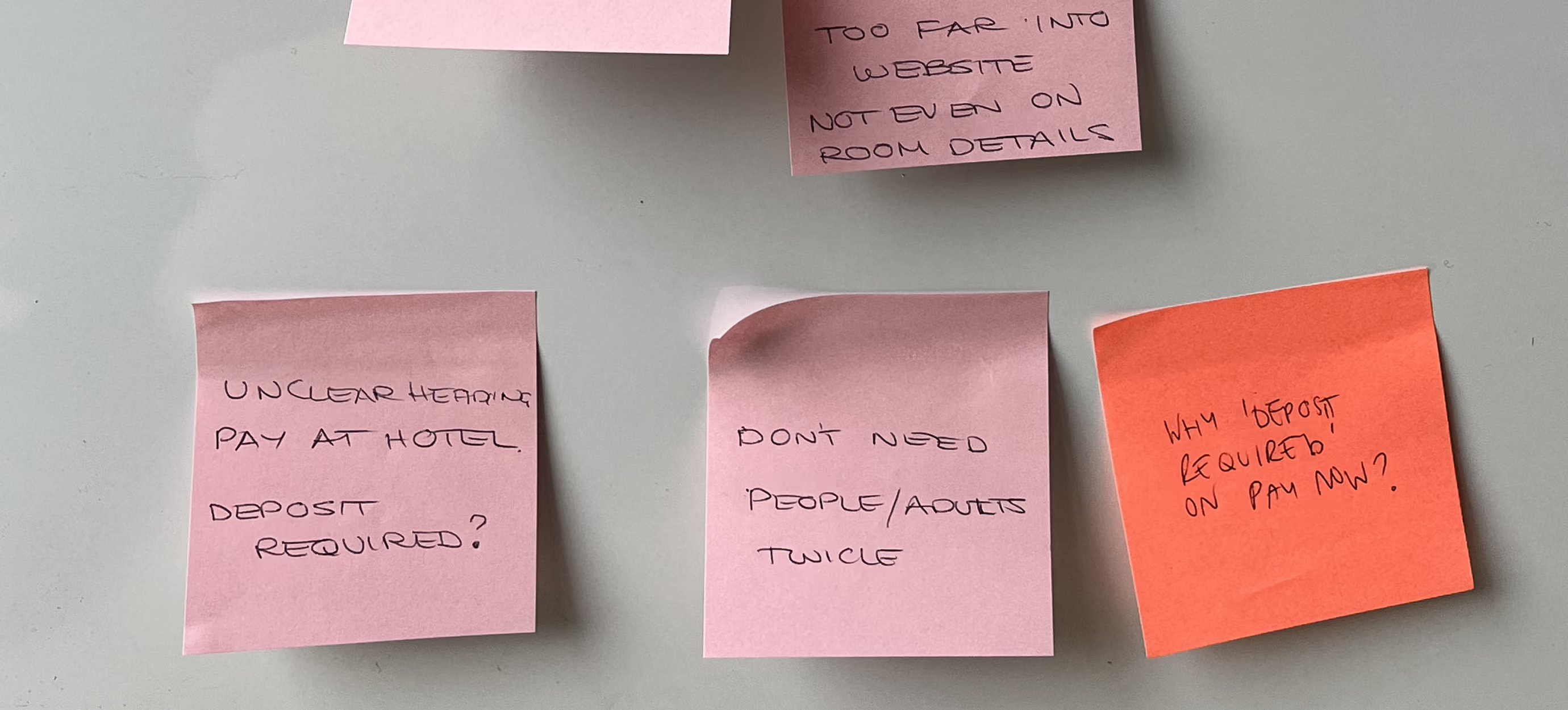
Diploma in UX course: The brief
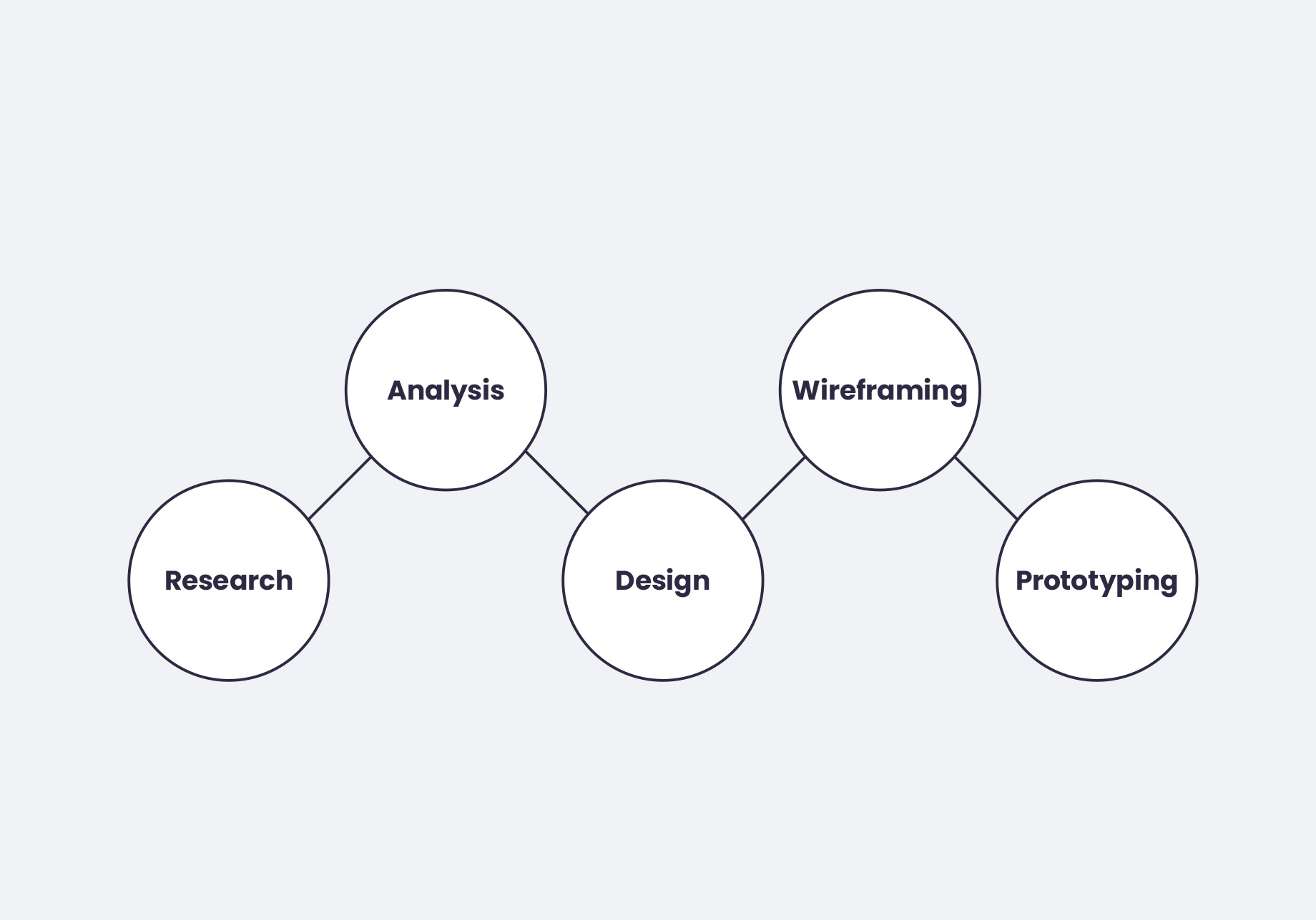
The full UX process that I used throughtout this course.
Diploma in UX course: Competitive benchmark
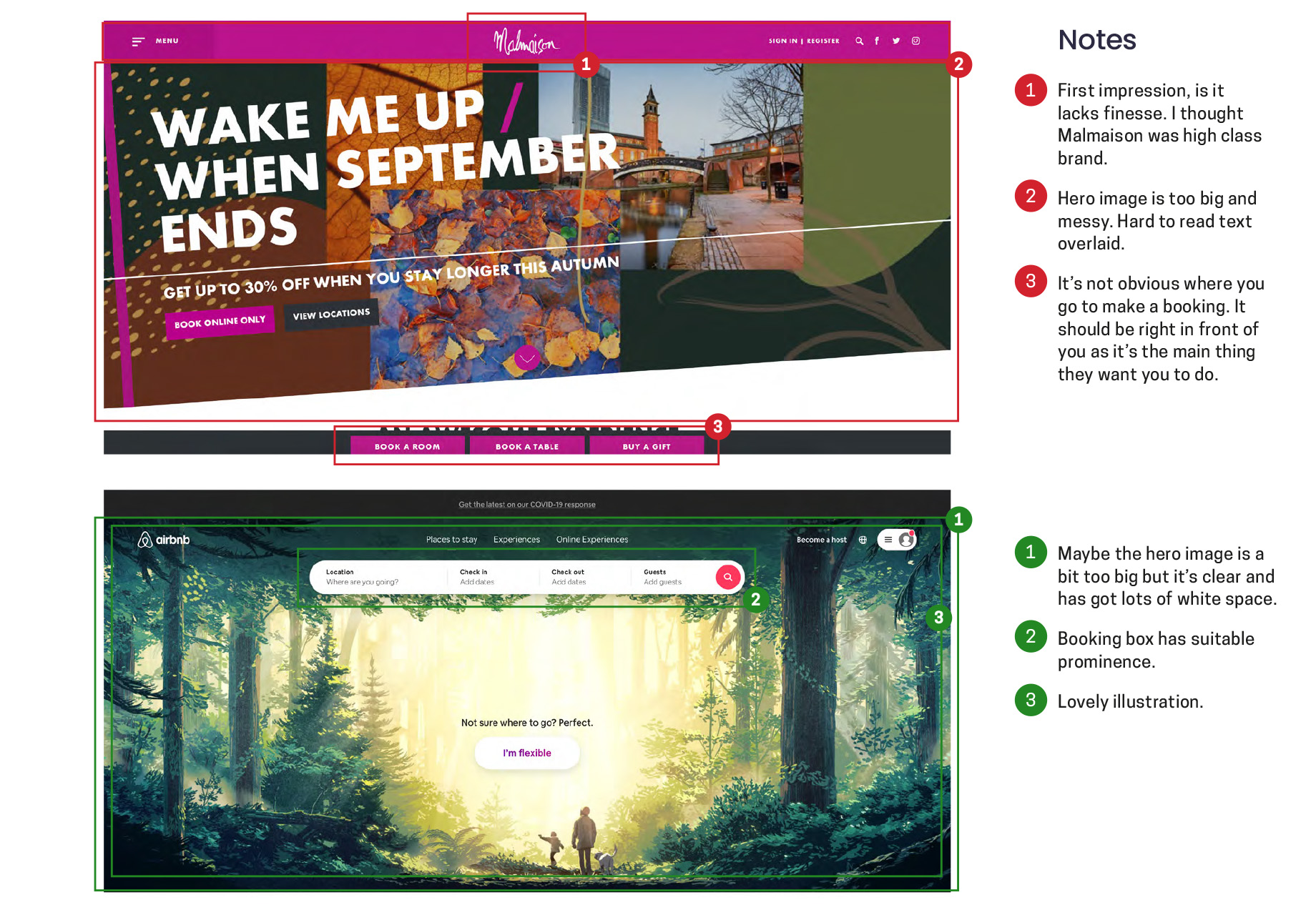
I reviewed many competitors websites in order to learn how they solved the booking process, to understand their design conventions and to understand best practice. I found how websites deal with the booking process vary greatly. On some websites, the process of making a booking was not clear and very slow. I thought Airbnb was a particularly great example, of which I should aspire to. They had a search box prominently on the homepage inviting the user to search within seconds. Shown above are two examples from my analysis.
Diploma in UX course: Usability test
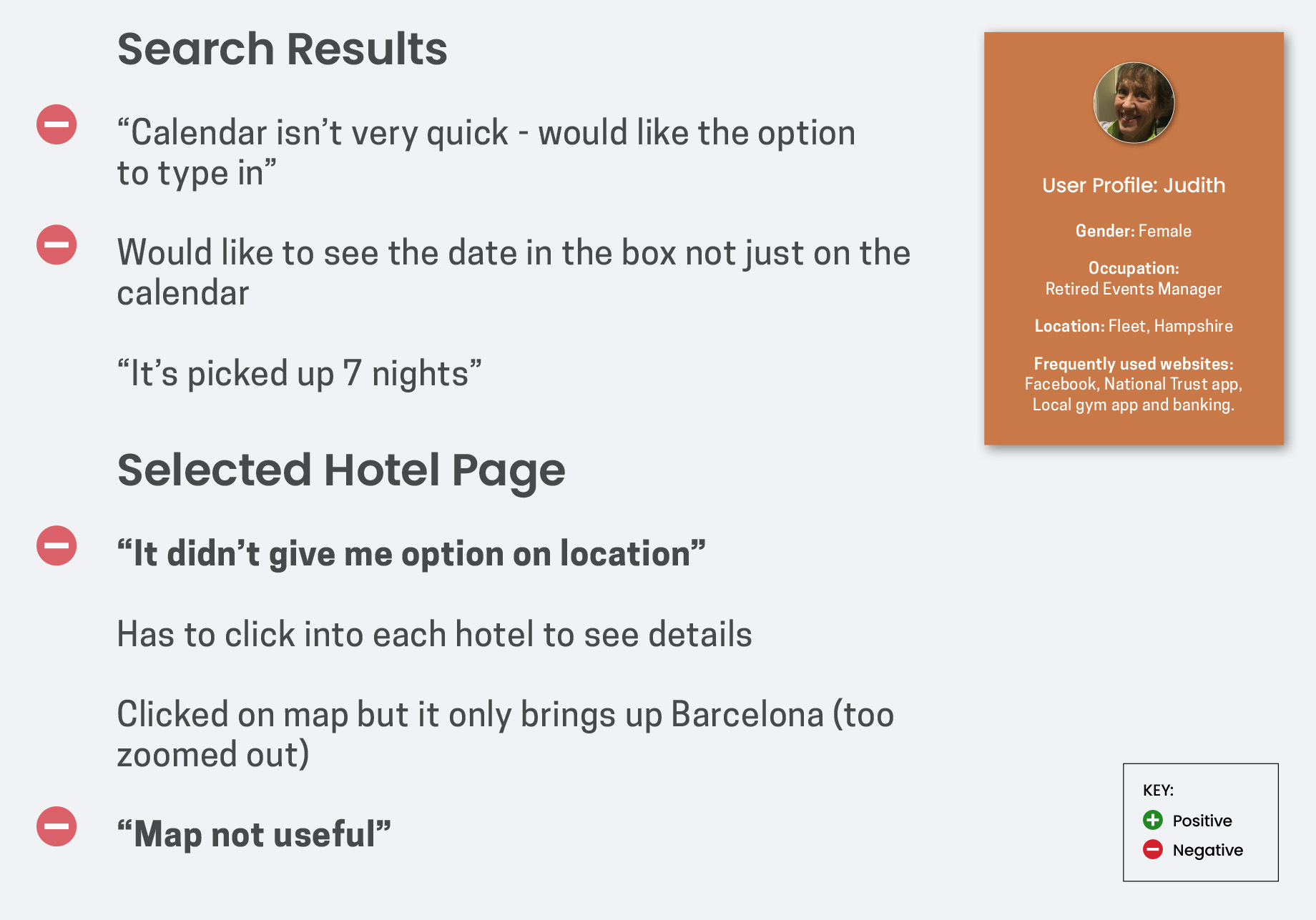
For this task, I discovered much can be learned from watching a user perform tasks on a website or app. Ideally this should be in person but in a video call is also effective. I showed Judith two hotel website examples and I observed her throughout the booking process. I gave Judith the details on where and when to book and asked her to talk aloud so I could understand her goals. I took notes to analyse my findings which I placed into a presentation document.
Diploma in UX course: Affinity diagram
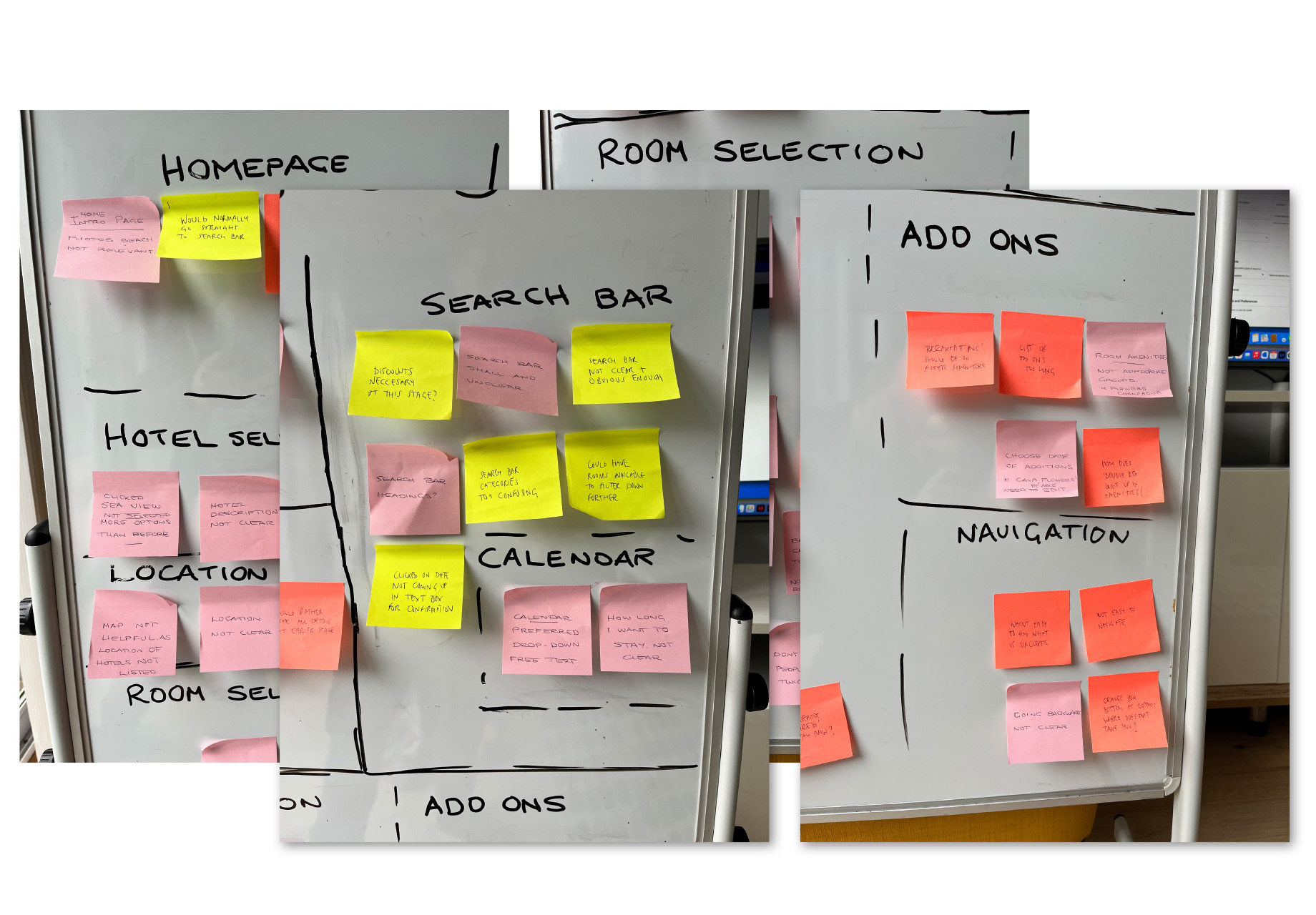
I learnt that an affinity diagram is a great way of structuring large amounts of data. It is, of course, better to carry out this task in a team but unfortunately this wasn’t an option to me so I once again enlisted Judith. We grouped our research data into what we thought were intuitive patterns and in a logical way.
Diploma in UX course: Customer journey map
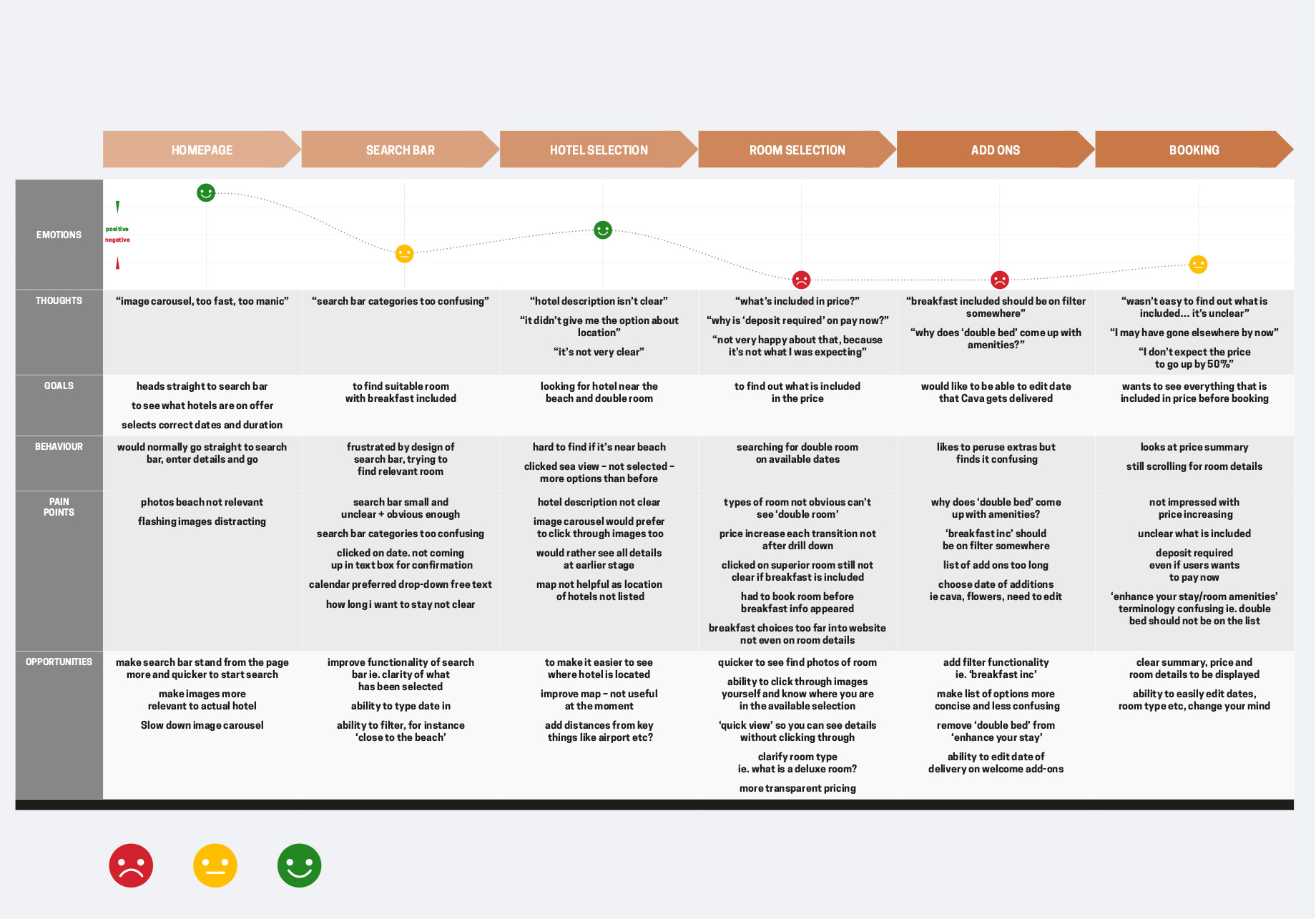
Next, I created a customer journey map to structure and analyse my findings further. I discovered a customer journey map helps you identify user goals, behaviours, pain points and mental models in each step of the customer journey. Emoticons were used to indicate user satisfaction at each phase of the booking process on competitor websites.
Diploma in UX course: Flow diagram
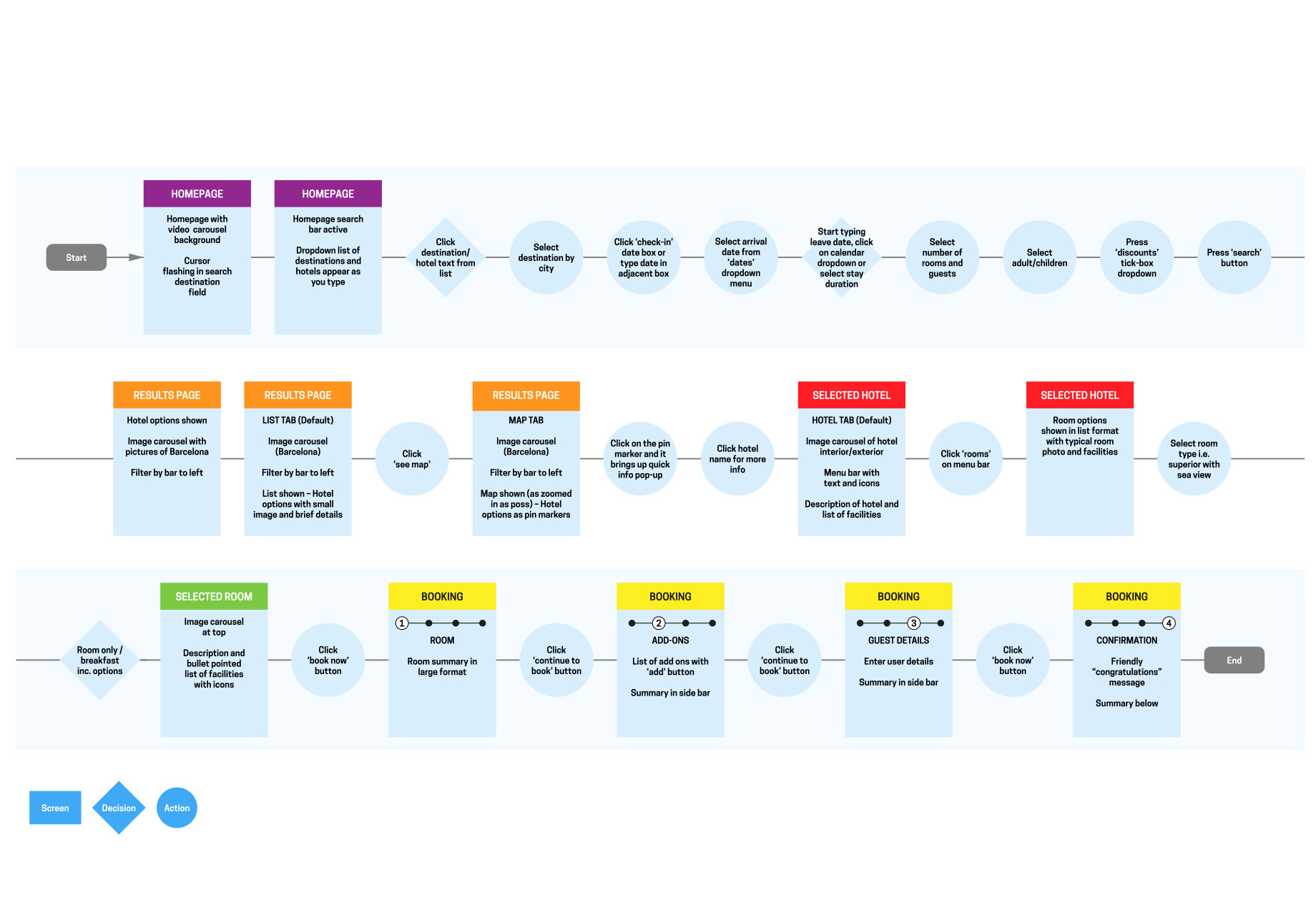
I learned that a flow diagram shows how visitors navigate through a website or app. It addresses the issues highlighted in the customer journey map. Pain points are addressed and better solutions are laid out. Usually a flow diagram covers all possible user flows and scenarios but in this case, for the sake of simplicity, only the most common use case was drawn.
Diploma in UX course: Wireframes
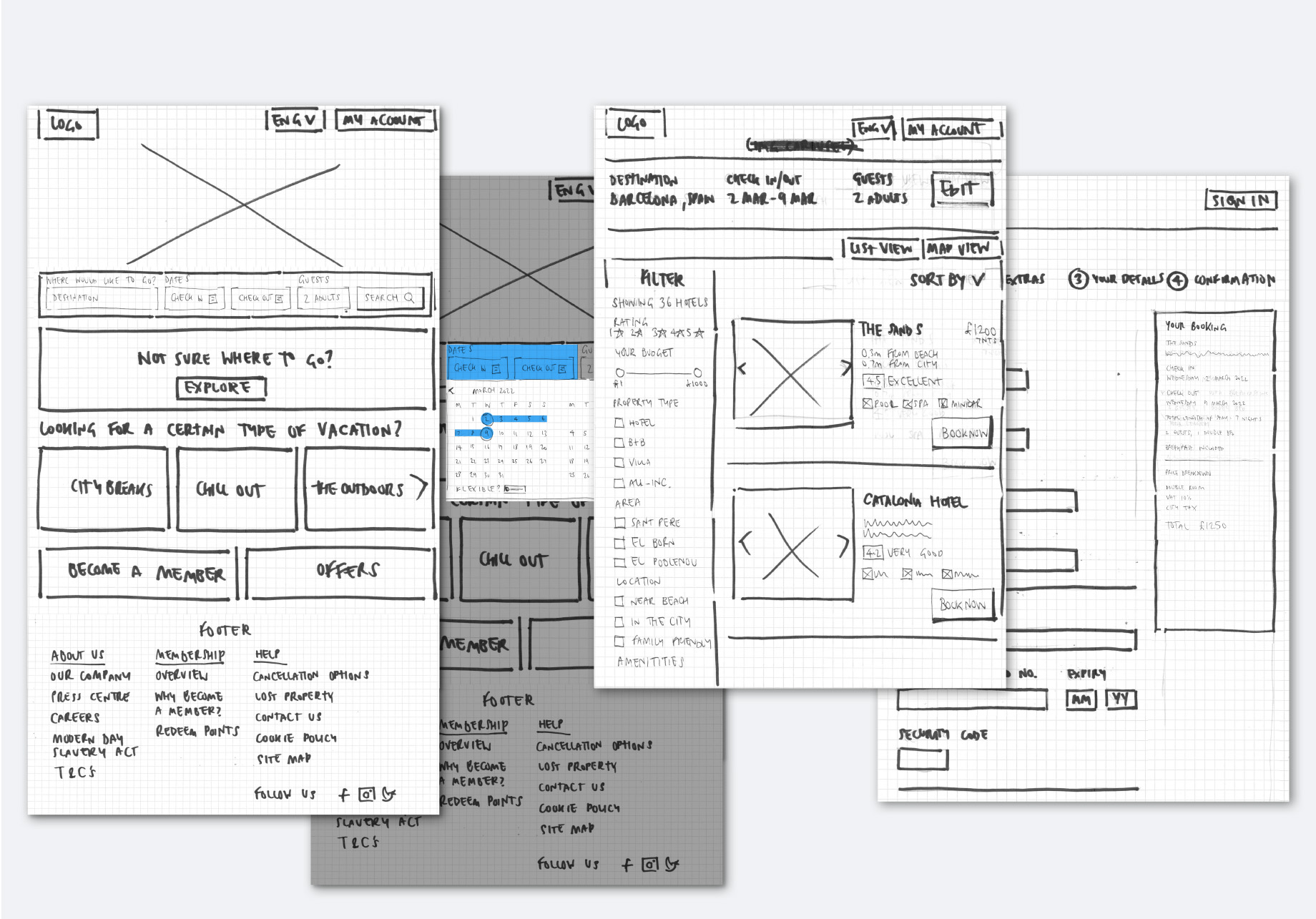
After completing the flow diagram I began sketching out screens for the booking process using pencil and paper. These sketches would function as a low fidelity prototype. The benefits of this type of simple sketching is that with little investment of time and money you have an early prototype. I took my designs through several iterations in pencil first, before moving onto pen.
Diploma in UX course: Medium fidelity prototype
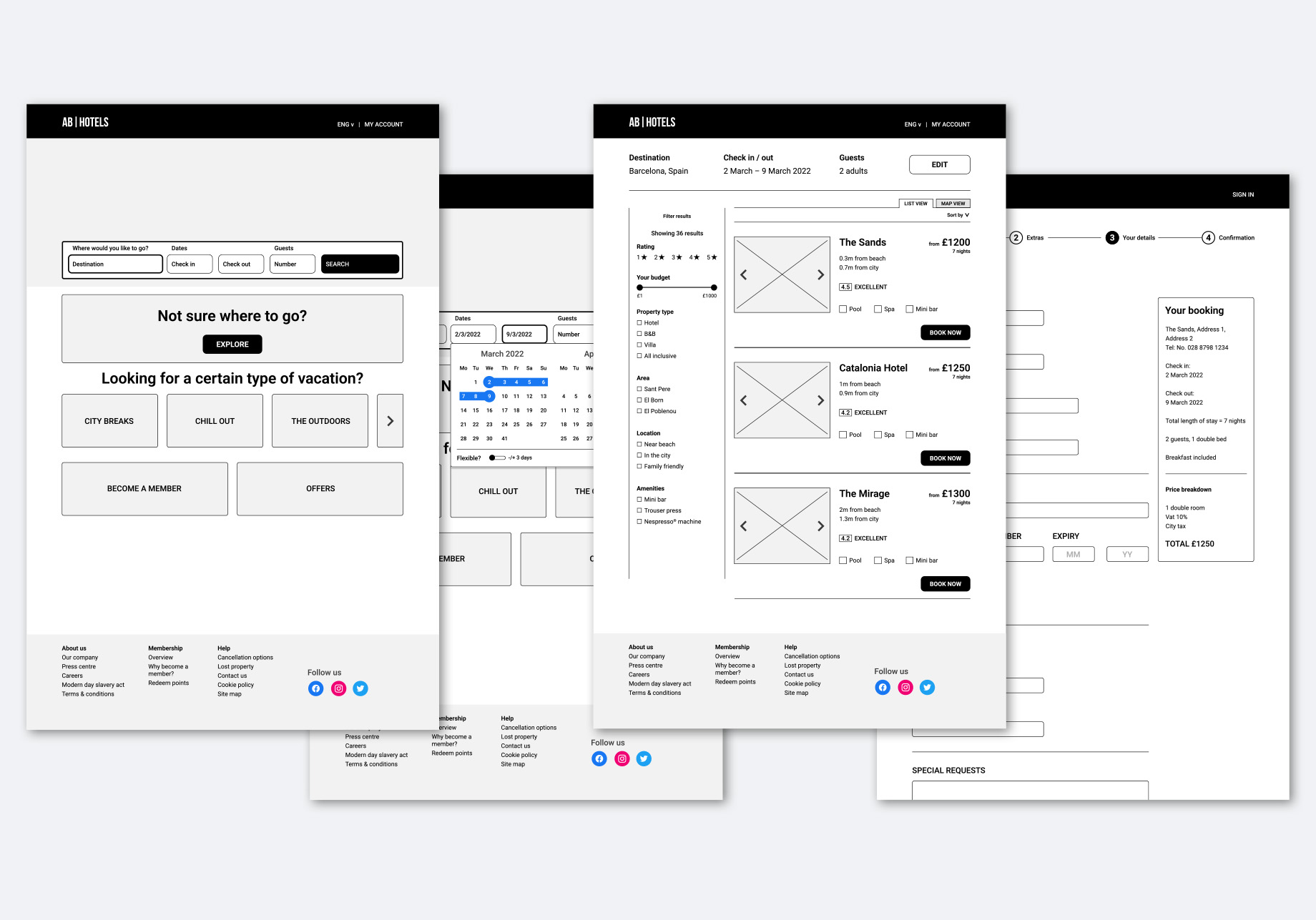
Once I was happy with the sketches, I built a medium fidelity prototype using Figma. I used this interactive prototype to test the high level flow, screen layouts, text and basic interactions. You can walk through the prototype using this link:
Link >Diploma in UX course: Annotations
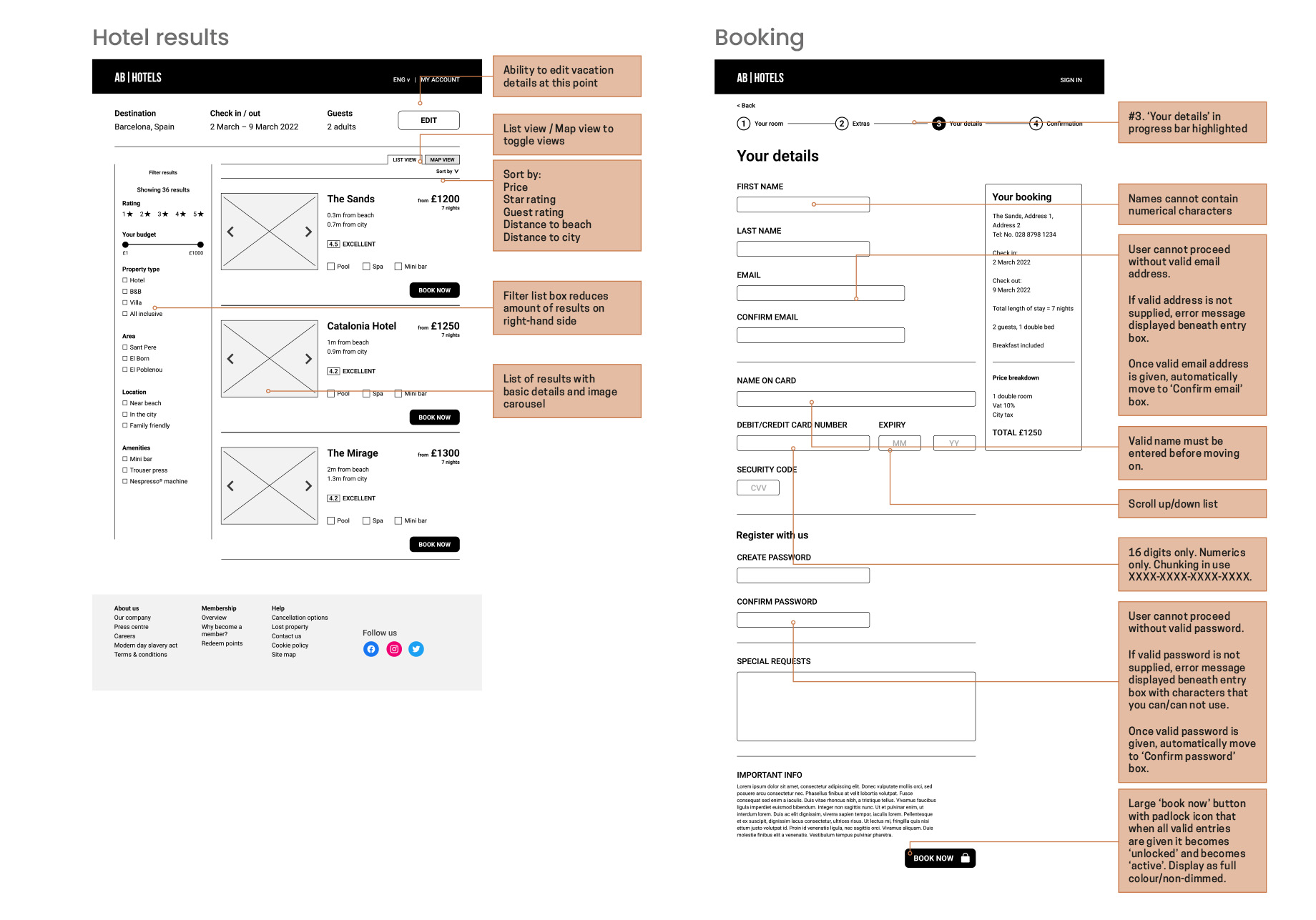
Next I made annotations on the prototype, making my intentions clear and what each interaction should do. This included instructions regarding navigation, lists of filter outcomes and error messaging. These notes would enable a fast handover to a potential developer. With more time I would have tested my solution further to ensure I had the best solution with A/B testing.
Diploma in UX course: Conclusion
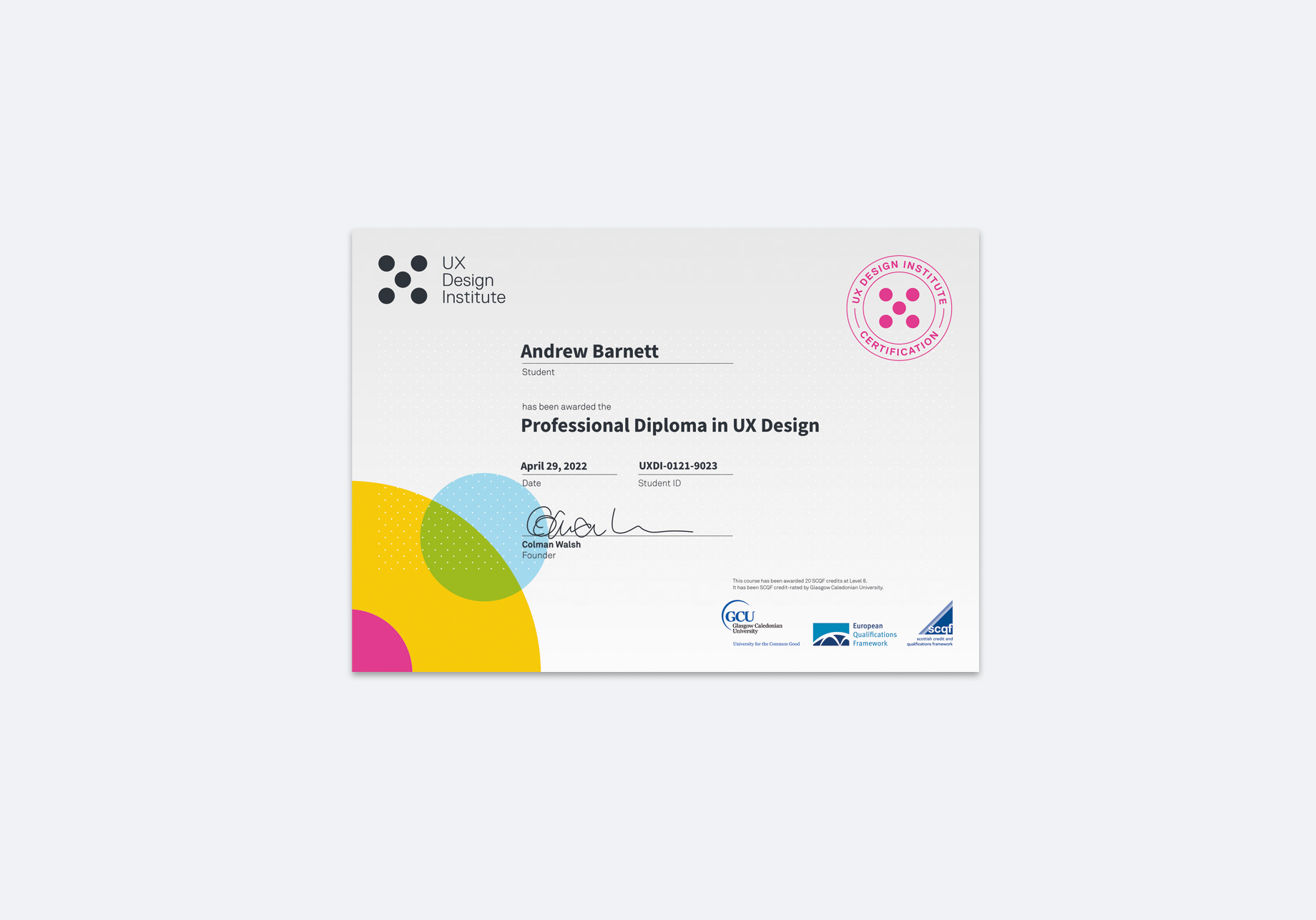
I enjoyed learning more about the UX design process. The course taught me to always focus on creating the best possible experience for the user. I found that the importance of taking time over all stages of the process is crucial as more time, money and effort is otherwise wasted. Before undertaking the course I did not realise just how much research went into digital products but now I fully appreciate the value of thorough preparation. Although before the course I was aware of poor user experience online, it was enlightening to discover more about the ‘design thinking’ within the discipline. I feel the course proved invaluable and I am hoping that my new skills will help me progress further within the field.